
A day in the life
By Dr. Slappy
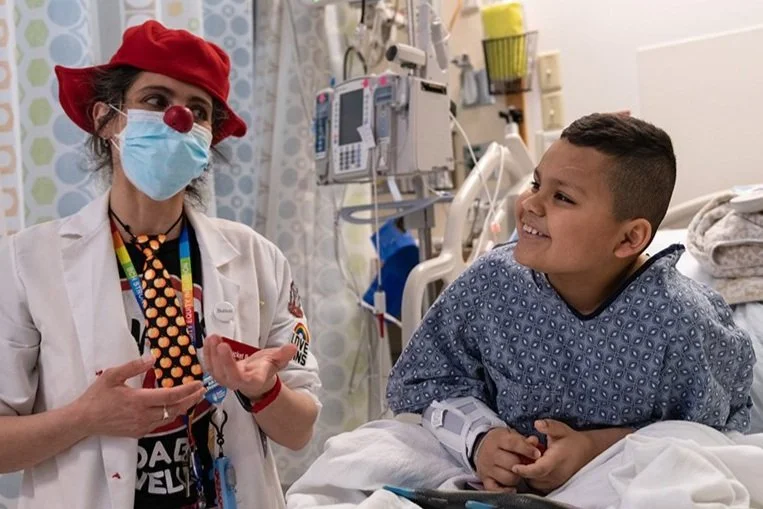
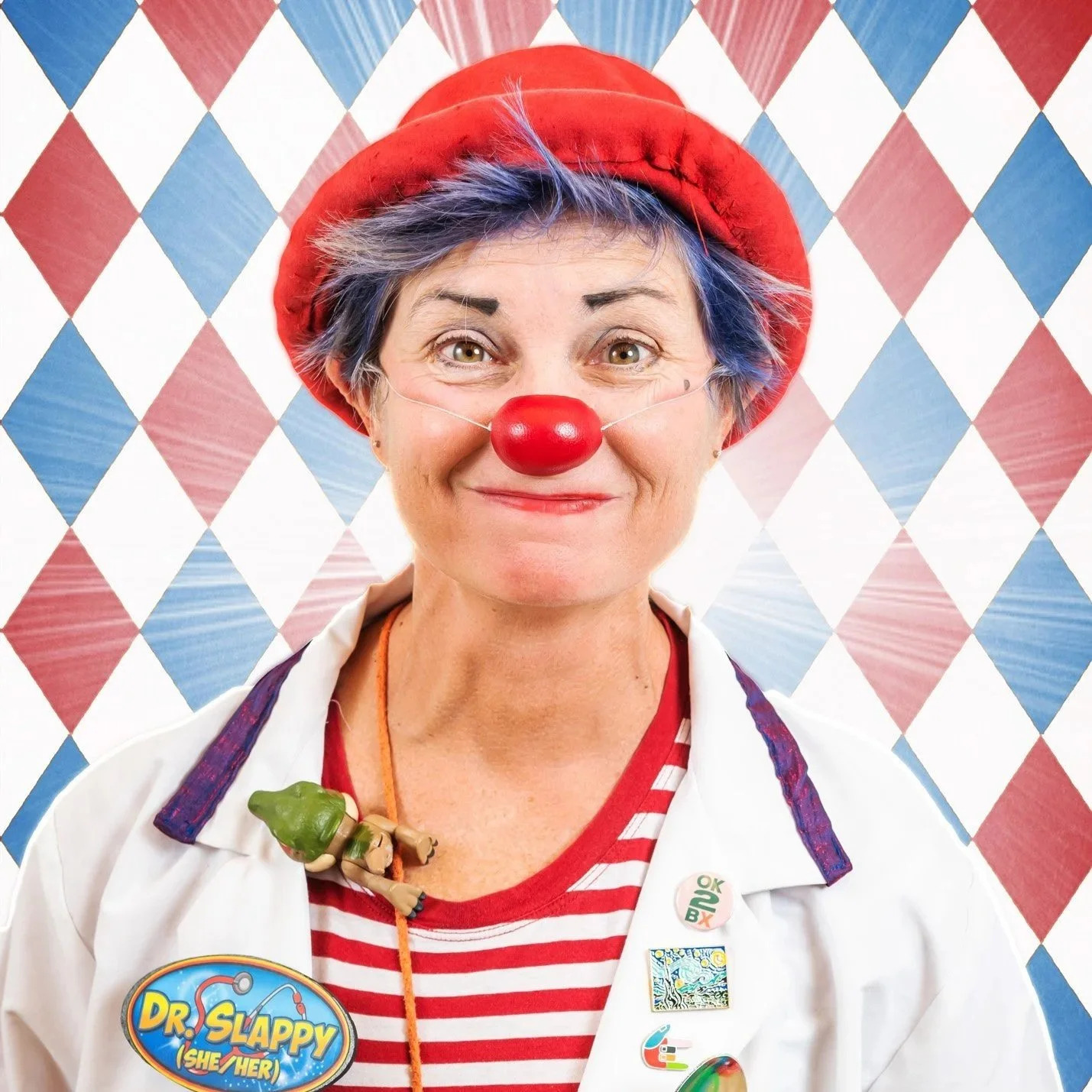
A Day in the Life of a healthcare clown
9:30am arrival at the hospital, meet partner, dress and prep for the day. This includes a ‘check-in’ to set intentions for the day both artistically and emotionally.
10:00am head to the child life office to pick up our census – this is a list of all the patients we will see. It has information on it that will help us do our job, which includes ages, gender, diagnosis and any special needs we should be aware of such as autism or trauma. And we head to our first stop – pre and post op.
10:10am Our first customer on this day is a twelve-year-old with an already infectious smile who is thrilled to see us coming down the hall. With her, the play and connection is easy and her mother breathes easier at seeing her child laugh even as she is about to head to surgery.
10:20am The nurses on this unit always make sure we know to see their patients. They give us tips like – this one is a bit grumpy, so proceed with caution. They are thrilled when we get this kid to stop crying and engage in a game of the invisible ball with us.
10:30am around the corner – we’ve been requested by the nurse and the child life specialist to see the kid in room 14, who’s also waiting for surgery. She is a tiny 4-year-old accompanied by her parents and grandmother. She eyes us with shy curiosity and then puts her blanket over her head. My partner and I say to each other ‘wasn’t there just a kid in that bed?’ ‘I’m sure there was…where did she go?’, at which point we hear a hearty giggle from under the blanket and the kid bounces out from behind it ‘here I am!’. Game on. As healthcare clowns, we search for the game in the room and the most delightful ones are when the kid chooses the game for us. We play peek-a-boo hiding blanket game with this kid the whole time, with her giggles getting loud enough to be heard in the hallway. When we leave the room, the nurse outside thanks us, because she knows we are a part of the team that helps make the overall hospital experience so much better for that family.
10:40am We see two more kids in this area – one who we think is spiderman because of his outfit – he ends up shooting webs at us and getting us all tangled in his imaginary web. On the way out, we have a brief visit with a boy and his parents who are waiting for his sibling to come out of surgery. You can feel the nerves from the parents and also sense that the kid is nervous too because his parents seem weird. He really needs the laughs we find with him.
10:50am On to our next unit, which is an overflow floor that has both adults and kids. We are here for the kids, but quite often will be called in to say hello to an adult or provide musical accompaniment as they walk down the hall. The kids on this day include a pair of brothers aged 7 and 10, from England. The patient is in the bed with a flat affect. He doesn’t feel well. We don’t obligate him to engage with us – we visit with the mom and do a quick bit with the brother involving Dr. Monday’s rising tie. When this bit of magic happens, the patient’s eyes open wide and he sits up to see better. The mood has shifted. The boy is feeling like a kid again. The mother thanks us profusely for bringing laughter and joy to them.
11:00am We begin our rounds on the first inpatient floor, and we have meaningful encounters with at least 10 patients in their rooms, in the hallways and in the play room before heading to lunch. Among these visits, we meet people from vastly different cultures who all embrace the healthcare clown as a kind of shaman, bringing hope and joy and laughter into an otherwise scary and sterile place. Highlights of this day include an intensely intellectual visit with a kid on the spectrum. Our set up for this includes a heads up from the nurse that ‘it could go either way – he might love you and he might hate you, he’s been all over the place today’. This never deters us from the visit. We always proceed with caution, using our Spidey senses to read the room and assess the situation minute by minute. If we get the feeling he’s not with us, we switch tactics. If he really isn’t up for a visit, we create a quick exit and empower him with the ability to say ‘no’ to us. This rarely happens, and this kid was very interested in seeing us, if only to help him get a book. He wants to read something, and so we offer to look for a book. What kind of book, we ask. He says, I need a book about all the countries in the world. This seems intellectually higher than we expect to hear from this kid, but the game is on. He decides to see how smart the clowns are and asks ‘which country has an Eiffel tower?’, Dr. Slappy jumps in with – ‘France’! Then he asks, ‘which country has a great wall?’ Dr. Monday shouts ‘China!’. Dr. Slappy suggests we need a tie breaker question. So, the kid says ‘what year did Russia gain its independence?’. Both Dr. Monday and Dr. Slappy are floored by the level of this question coming from a kid who has been characterized as and presents as a much younger intellect than his actual age. It is a perfect example of meeting kids where they are at, not judging a book by its cover – and going wherever they want to take you.
1:30pm After lunch, we head to the heart floor, which is home to lots of very tiny babies and a few older kids. One kid has been waiting for a heart transplant for nearly six months. He is four years old. He has seen the clowns almost every week of those six months, and has it listed on his weekly schedule in bold letters: THURSDAY CLOWNS! He has seen every trick in our collective pockets and knows every clown on our team by name. Each week, we are invited in (well, actually he demands our entry) and we spend as much time as possible providing therapeutic humor interventions that help him feel agency and a sense of fun while he waits for a lifesaving transplant. All of our clowns have a tremendous amount of empathy for this child and his family, and for all the humans we meet at the hospital.
3:00pm One last moment before we wrap for the day. We encounter the kid and his parents that we saw early in the waiting room at day surgery. This family clearly has a very serious situation going on with their child who is recovering from surgery. The sibling is lost, confused and not understanding what has made his parents so sad. Our visit with him starts off quite gentle – matching the mood of the moment as always, but soon it is clear that he and his parents desperately need the release that laughter can bring. We finish the visit and button our day with some breathing and cleansing moments between partners and then we head out into the world, holding each of the encounters close to our hearts. On this day, we had encounters with almost 40 kids. That happens each and every day that we have clowns working in the hospitals we serve. We are grateful for the privilege of helping make life better for kids and families.